Beyond Monuments: How India’s Heritage Sites Are Redefining Cultural Tourism
According to Kashmir Life, PIB-organised media delegations have been exploring Indian heritage sites, with the reported itinerary extending from Bhimbetka in Madhya Pradesh to Dakshina Chitra in Tamil Nadu.
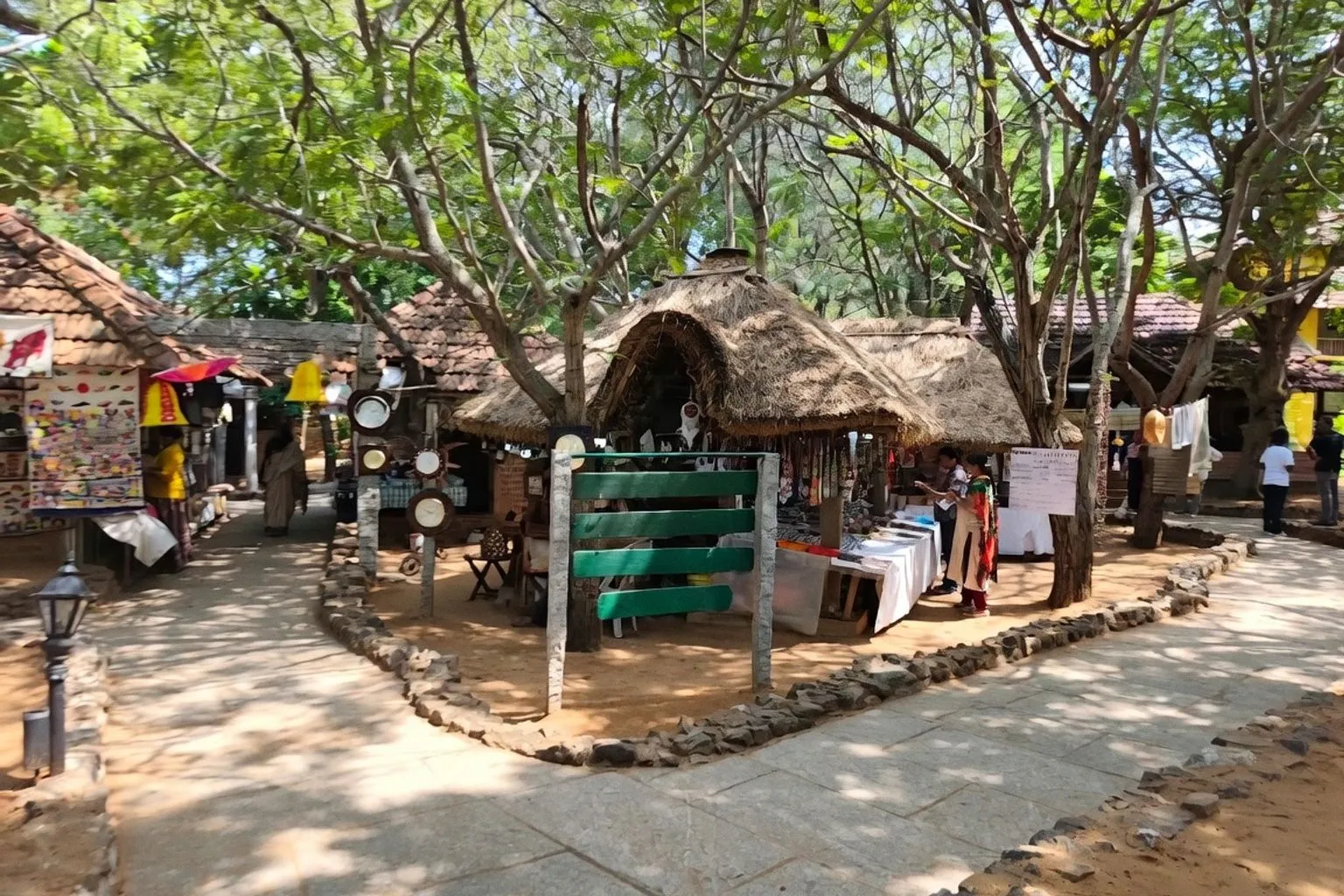
For travellers who plan routes around living heritage rather than isolated monuments, the significance lies less in a new destination announcement than in the way these places are being presented together: archaeological landscapes, traditional architecture and cultural preservation are being treated as connected parts of India’s heritage map.
For a Gandikota itinerary, that is a useful distinction. A fort, a canyon and a reconstructed heritage setting may occupy very different terrain, yet each asks the visitor to read the space carefully—what is original, what has been preserved, what has been reconstructed, and what is being interpreted for the public.
A heritage route is more than a list of monuments
The PIB media visits reportedly included Bhimbetka and Dakshina Chitra, while related headlines from Kashmir Convener and Greater Kashmir describe Dakshina Chitra as a possible model for preserving traditional architecture in Jammu and Kashmir. The available reporting does not announce a new visitor route connected to Gandikota, nor does it provide changes to access, ticketing or local facilities there.
It does, however, place emphasis on two different ways of understanding heritage. Bhimbetka represents a landscape in which archaeological evidence is encountered across rock shelters and their surrounding terrain. Dakshina Chitra, by contrast, is presented as a heritage museum model built around traditional homes, streetscapes and living environments. One asks you to move through a preserved archaeological setting; the other arranges architectural traditions so that their spatial relationships can be understood more directly.
That contrast matters when we walk through Gandikota. The gorge is not simply a viewpoint followed by a fort wall. The route between cliff edge, masonry, gateways and surviving structures shapes what we understand about the site. The order in which you cross those spaces can be as important as the individual landmark itself.
What to check before treating the news as a travel lead
The headlines point to heritage exchange and preservation, but they do not establish that Dakshina Chitra’s model will be replicated, funded or opened as a new attraction in Jammu and Kashmir. They also do not indicate any immediate change for travellers visiting Gandikota. Treat the story as context, not as a booking signal.
If you are building a wider heritage journey, separate three questions before committing to a detour:
- Is the site an archaeological location, a museum, or a reconstructed environment?
- Are you visiting a monument in its original setting or a curated interpretation of regional architecture?
- Does the available information confirm practical details such as opening arrangements, access and current visitor facilities?
That simple distinction prevents a common planning mistake: placing unlike sites on the same itinerary merely because they share the word “heritage”. A canyon fort demands attention to terrain and sequence; a museum of traditional buildings asks you to compare forms, materials and domestic space. Both can be valuable, but they do not offer the same kind of day on the ground.
The Gandikota connection
For independent explorers, the broader message is to read heritage routes spatially. When a report links Bhimbetka, Dakshina Chitra and preservation efforts elsewhere in India, it encourages a wider view of what is being protected: not only monumental façades, but also landscapes, construction traditions and the relationship between buildings and everyday life.
At Gandikota, keep that wider frame in mind as you traverse the fort and canyon rim. Look for the points where built heritage intersects with the red quartzite landscape, and do not rush from one named sight to the next simply to complete a checklist. The most useful visit is usually the one that leaves enough time to understand how the site is arranged—especially when the late light begins to separate the fort walls from the gorge below.