Padmanabhapuram Palace May Introduce Timed Entry to Preserve Historic Wooden Architecture
The Times of India reports that the Archaeology Department is considering an online, slot-based ticketing system for 17th-century Padmanabhapuram Palace after a ₹2.3 crore restoration.
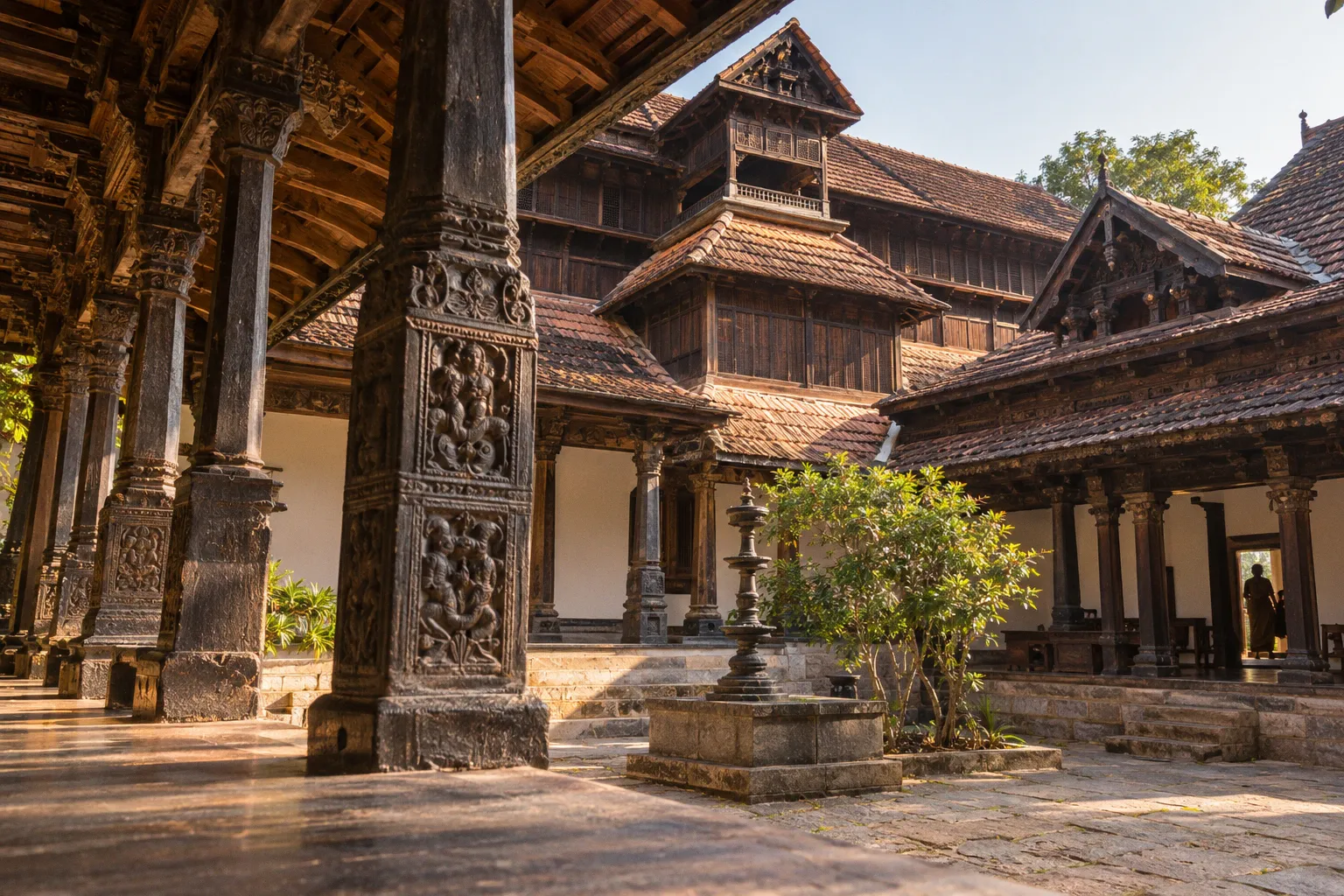
The proposal is intended to regulate high footfall and reduce pressure on the palace’s ancient wooden structure, making visitor timing an important part of planning a heritage stop. For independent travelers comparing monuments with more rugged outdoor routes, the key point is simple: access may become more structured, but the system has not been confirmed as active.
A possible change at the entrance
A slot-based system would shift the visit from an open-ended arrival toward a reserved time window, should the proposal move forward. That matters most when a palace visit is being fitted between other stops, because an online booking requirement could make flexibility harder than it is today.
At this stage, however, the available report describes the system only as under consideration. No launch date, booking platform, visitor limit, ticket price, or daily schedule is provided in the available facts. We should therefore treat this as a conservation proposal rather than a new rule already governing entry.
For travelers, that distinction is practical. Do not assume that a reservation is currently required, but do not assume that an unplanned arrival will remain the best approach if the Archaeology Department proceeds with timed access. The safest plan is to check the latest official visitor information before setting out, particularly if the palace is a fixed point in a tightly timed itinerary.
Why the wooden structure changes the visit
The stated concern is not merely queue management. The report connects the proposed ticketing system to the protection of the palace’s ancient wooden structure, following restoration work valued at ₹2.3 crore. In other words, the movement of visitors through the building is being considered alongside the condition of the monument itself.
That is a useful way to read heritage-access changes. A timed system can feel inconvenient when we are trying to keep a day open and exploratory, yet the pressure behind it is the physical vulnerability of the site. Wooden architecture is part of the reason a palace cannot be treated like an outdoor viewpoint where visitors can disperse freely across a broad landscape. The route through the building, the density of people inside it, and the pace at which rooms are traversed all become part of conservation.
For readers of a field-oriented travel guide, the wider lesson is familiar: a heritage monument and an open canyon do not reward the same kind of planning. At a cliffside site, spacing and weather may shape the route; inside a historic wooden structure, visitor concentration can become the central constraint. The proposed change at Padmanabhapuram Palace places that difference clearly on the map.
What to check before travelling
Until the proposal becomes an operating policy, the practical details remain unsettled. Check whether online slots have actually opened, whether entry is still available without advance booking, and whether the planned arrival time fits the rest of your route. Those are the points most likely to affect an independent itinerary, yet none is confirmed in the current report.
It is also worth allowing more flexibility than a simple arrival-and-departure calculation suggests. If access becomes time-based, arriving late could matter more than it would under a fully open entry arrangement; if the system is not yet implemented, the same assumption could lead to unnecessary planning. We should keep both possibilities in view rather than building a route around an unannounced schedule.
For now, the confirmed development is the consideration of slot-based online ticketing after restoration, driven by concern over high footfalls and the protection of the palace’s wooden structure. Watch for an official confirmation before treating timed entry as mandatory—and, if you want the most comfortable architectural reading of the site, aim for a visit when your schedule is not already crowded by the next stop.