Adventure tour operators in Gandikota: avoiding hidden costs
A low Gandikota camping price can cover little more than a tent, a patch of ground, and the right to sleep beside the gorge.
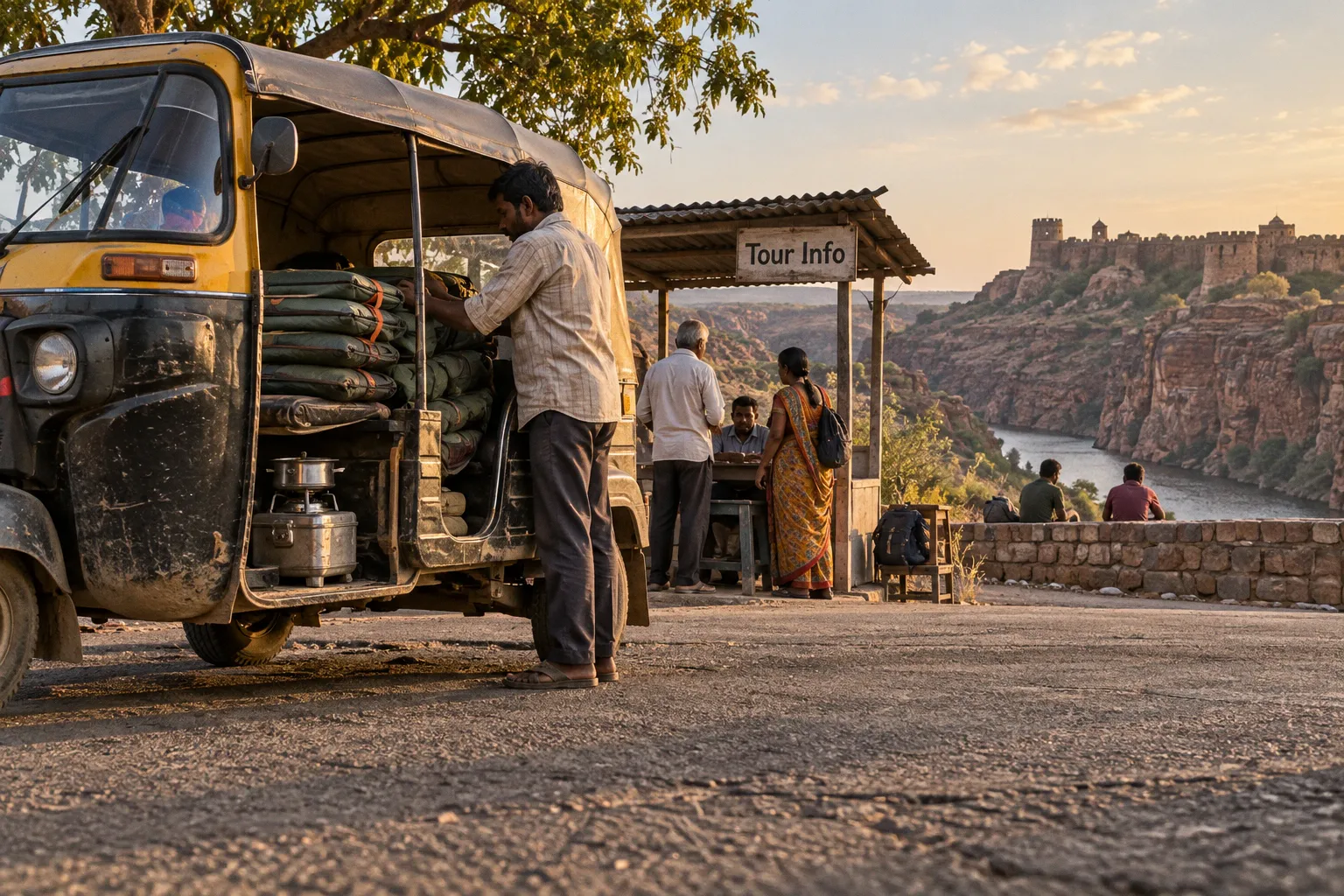
Adventure Tour Operators in Gandikota: How to Avoid Hidden Costs
Kayaking, rappelling, meals on the road, bottled water, camera charges, guide fees, and even a room upgrade may sit outside the number shown in the first message.
That is the central problem when comparing a Gandikota adventure tour operator: the cheapest headline rate is often not the cheapest trip. A bare alpine tent may start at ₹500 per person. A camping package with meals commonly lands between ₹900 and ₹1,599. Add Pennar River kayaking at another ₹250–₹400, then layer on transport meals, drinks, permits, or sightseeing fees. The final bill moves fast.
Book the package line by line. Ask what you will physically receive, what the operator will charge at camp, and which activities require a second payment before you commit.
The displayed price is not your trip cost. It is only the first anchor point.
Start with the base camping package, not the brochure headline
Gandikota operators use the word “camping” for several different products. That word can mean a basic alpine tent with no food, a furnished tent with meals, or an air-conditioned glamping setup near the gorge. These are not small variations. They change your sleeping arrangement, comfort, meal plan, and total spend.
A basic alpine tent without food or activities can start around ₹500 per person. That rate may suit an independent traveler carrying water, arranging transport separately, and treating the campsite as a sleeping base. It does not automatically provide an organized adventure itinerary.
Standard tent camping with meals generally sits around ₹900–₹1,599 per person. The range is wide because operators bundle different levels of bedding, food, camp access, evening activities, and service. Do not treat the upper end as proof that kayaking or rappelling is included. It may still be a land-only camping package.
Then come the upgrades. Air-conditioned glamping tents or AC rooms near the gorge can run around ₹1,899–₹2,199 per person. That premium can make sense if you need a more controlled sleeping environment or are traveling with people who will not tolerate a rough camp. It does not make the package a better adventure product. You are paying for accommodation and amenities, not necessarily for better river access, stronger safety systems, or a more complete activity schedule.
Use this comparison before you open the operator’s activity menu:
| Package type | Typical quoted range | Usually represents | Common gap |
|---|---|---|---|
| Bare alpine tent | From ₹500 per person | Tent accommodation without food or activities | You arrange meals, drinks, and activities separately |
| Standard tent camping | ₹900–₹1,599 per person | Tent stay with meals in many packages | Kayaking, rappelling, transit meals, and some fees may remain extra |
| AC glamping or room upgrade | ₹1,899–₹2,199 per person | More comfortable accommodation near the gorge | Comfort upgrade does not guarantee included adventure activities |
| Kayaking add-on | ₹250–₹400 extra per person | Optional Pennar River activity | Often excluded from the advertised camping rate |
Treat every package as a loadout. Accommodation is one item. Food is another. Water is another. Activities are separate unless the operator states otherwise in writing.
Ask for the actual inclusions
Do not ask only, “What is the package price?” Ask the operator to break the rate into deliverables:
- What type of tent or room do I receive?
- Is the quoted rate per person, per tent, or per night?
- How many meals are included, and on which days?
- Does the package include drinking water?
- Is kayaking included, or is it an optional add-on?
- Is rappelling included, and from which location?
- Does the operator provide helmets, harnesses, life jackets, paddles, and trained staff?
- Are sightseeing stops outside Gandikota Fort charged separately?
- Are early check-in and late check-out billed?
- Are camera or photography charges included?
- Does the price cover transport from the arrival city, or only local camp services?
If the answer arrives as a vague paragraph full of “activities available,” keep drilling. “Available” does not mean “included.” “Camp access” does not mean “guided canyon trekking.” “Adventure package” does not mean every item on the operator’s social-media gallery.
Kayaking on the Pennar River is a frequent add-on
Gandikota kayaking is one of the easiest places for a booking total to split. Operators often advertise camping and river activities together, but the Pennar River session may be priced separately at ₹250–₹400 per person.
That extra charge is not automatically unreasonable. Kayaks, paddles, buoyancy aids, staff, river access, and transport to the launch point all cost money. The trap appears when the original advertisement creates the impression that kayaking belongs to the base package and the operator reveals the add-on only after you arrive.
Get the river activity defined before you pay:
1. Confirm the exact duration. A short introductory paddle and a longer guided river session are different products.
2. Ask where the launch point is. Pennar River access may require local movement from the camping area.
3. Confirm the equipment. The package should specify whether a kayak, paddle, and personal flotation device are supplied.
4. Ask about weather cancellation. Find out whether you receive a refund, rescheduling option, or credit if water conditions stop the activity.
5. Check the participant limit. A large group with one guide creates a different experience from a small guided session.
6. Ask who can refuse participation. A responsible operator should stop a participant who cannot swim confidently, arrives intoxicated, ignores instructions, or is not fit for the conditions.
7. Clarify the payment point. If you pay at the riverbank, ask for the same price the operator quoted during booking.
A kayak price is useful only when you know what sits behind it: time on the water, equipment, supervision, and a clear cancellation rule.
Do not confuse paddling with a safety system
Kayaking is not a decorative add-on for a canyon itinerary. The river section brings its own hazards: changing water conditions, uneven launch points, slippery banks, heat exposure, and poor access to help. You need an operator who controls the activity, not one who simply hands over equipment and points toward the water.
Watch the briefing. A competent crew should explain how to enter and exit the kayak, what to do after a capsize, where to keep the paddle, how to follow the guide, and when to return. The life jacket must fit and remain secured. Do not accept a loose buoyancy aid because the operator is rushing the group.
If the operator cannot explain the route, weather decision, equipment condition, or emergency response, skip the activity. A cheap river session becomes expensive when you spend the rest of the day managing a preventable problem.
Separate Gandikota Fort from paid sightseeing stops
Gandikota Fort itself does not require an entry ticket. That distinction matters because a broad itinerary may combine the fort, gorge viewpoints, nearby caves, local temples, and transport into one promotional package. The fort access can be free while other stops generate additional charges.
Belum Caves is the common example. Operators may exclude entry fees and guide charges for external sightseeing stops. The same applies to transport arrangements, waiting time, or a local guide added to a longer route. If the package promises “Gandikota plus nearby attractions,” do not assume the price covers every gate and guide.
Ask the operator to separate the itinerary into three columns:
- Included destination access: what you can enter without another payment.
- Excluded destination charges: entry tickets, guide fees, camera permits, parking, or local service charges.
- Transport costs: vehicle hire, fuel, driver waiting time, transfers between camp and side attractions.
This is where many travelers lose control of the budget. A driver may quote one amount for a transfer and a different amount for waiting while you explore. A sightseeing package may include the vehicle but exclude attraction entry. A guide may appear optional until the group reaches a site where the operator says one is required.
None of these charges should surprise you if you ask for a stop-by-stop breakdown.
Build the route around your actual priority
Do not pay for a long sightseeing loop if your main goal is canyon trekking, gorge viewpoints, or a river session. More stops can make a booking look richer while reducing the time available for the activity you came to do.
For a canyon-focused trip, confirm:
- how much time the operator allocates to the gorge;
- whether the route involves loose rock, exposed edges, steep descents, or scrambling;
- whether the guide leads the group or simply drives it between viewpoints;
- whether the schedule changes during the hottest part of the day;
- whether return transport remains available if you leave the main group.
Gandikota gorge trekking demands more than comfortable shoes and a camera. Red quartzite surfaces can be uneven, dusty, and sharp. Keep both hands available on exposed sections. Step deliberately. Do not crowd the person ahead near a drop. If the route includes a steep descent or a rappelling section, ask to inspect the anchor system and access line before committing.
A commercial operator should not treat a 150-foot rappelling drop as a casual photo opportunity. The height alone demands a proper harness, helmet, controlled belay, inspected anchors, a competent instructor, and a clear participant briefing. If the crew rushes the safety check because the next group is waiting, you have your go/no-go answer.
Glamping upgrades can hide the biggest assumption
A room or air-conditioned glamping tent solves one problem: sleeping comfort. It does not automatically solve transport, food, water, activity access, or schedule coordination.
The upgrade range of roughly ₹1,899–₹2,199 per person can be reasonable for travelers who need air conditioning, a more enclosed room, or a softer base after a long road journey. But compare the upgraded package against the standard tent package line by line. Some operators remove nothing from the activity exclusions when you upgrade. You simply receive a better bed.
Check whether the premium rate includes:
- breakfast, lunch, and dinner;
- evening refreshments;
- mineral water;
- bedding and towels;
- electricity and charging access;
- local transfer to the river;
- kayaking or other activities;
- early arrival or late departure;
- access to common areas and camp facilities.
The words “premium stay” and “glamping” describe comfort, not scope. If the operator’s booking message lists an AC room first and the activities later, read the activity section as a separate purchase unless the price says otherwise.
Compare comfort against time on the route
A room upgrade may be the wrong spend if you arrive only to sleep for a few hours before a dawn departure. Conversely, a basic tent may be a poor choice if the group includes children, older travelers, or anyone who needs reliable temperature control after a full day outdoors.
This is not about choosing the cheapest bed. It is about matching the sleeping product to the operational plan. Pay for comfort when it protects the next day’s performance. Do not pay for an upgrade because the operator uses a better photograph.
Read the exclusions before you transfer money
The booking message, invoice, or package description should show the exclusions in plain language. If the operator gives you only a total price and a list of attractions, treat that as incomplete.
Common exclusions around Gandikota camping and adventure bookings include:
- mineral water and other beverages;
- camera or photography permit charges;
- early check-in;
- late check-out;
- meals during road transit;
- entry fees and guide charges for nearby attractions;
- optional kayaking;
- rappelling or other technical activities;
- local transfers to activity points;
- equipment deposits or damage charges.
Transit food is a frequent blind spot. A package may include meals at the camp but nothing during the drive from Bengaluru, Chennai, or another departure city. If the operator coordinates the vehicle, ask whether the quoted amount includes only transport or also roadside meals, tolls, parking, and driver expenses.
Do not assume that a city-to-city transfer belongs to a local camping rate. Unless the operator explicitly sells a travel-inclusive package, the base price normally applies to the camp and its stated services, not the entire journey.
Use a written cost sheet
You do not need a complicated contract. A message with a clean breakdown is enough to expose most hidden fees. Ask the operator to confirm:
| Cost line | Confirm before booking |
|---|---|
| Accommodation | Tent, glamping tent, or room; occupancy and nights |
| Food | Meals included, meal timing, transit meals |
| Water | Drinking water supplied or purchased separately |
| Kayaking | Included, optional, duration, equipment, cancellation terms |
| Rappelling | Included or extra; safety gear and qualified supervision |
| Sightseeing | Entry, guide, camera, parking, and local charges |
| Transport | Pickup, drop-off, local transfers, tolls, fuel, waiting |
| Timing | Check-in, check-out, early arrival, late departure |
| Refunds | Weather cancellation, activity cancellation, no-show policy |
Save the operator’s final confirmation. If the package changes between the first quote and arrival, you have a record of what was promised. Avoid sending full payment to an operator who refuses to specify inclusions or who keeps replacing prices with promotional language.
How to judge adventure sports operator reliability
Price transparency is not the only reliability test. An operator can disclose every charge and still run a weak activity. Check how the crew handles risk before you hand over your money.
Look for operational answers, not marketing claims:
- Who leads the kayaking session?
- Who controls the rope during rappelling?
- What training or certification does the technical staff hold?
- When did the crew last inspect the ropes, harnesses, helmets, and anchors?
- What happens if the river level or weather makes the activity unsafe?
- How does the operator manage a participant who panics on the route?
- Where does the group meet if mobile coverage fails?
- Is there a first-aid kit and a defined evacuation plan?
- How many participants does one guide supervise?
You are not demanding a military operation for a short recreational session. You are checking whether the operator has thought beyond selling the slot.
Red flags that should stop the booking
Walk away when the operator:
- refuses to state whether kayaking is included;
- promises every activity without asking about age, fitness, or experience;
- treats a life jacket, helmet, or harness as optional;
- cannot explain what happens after a weather cancellation;
- adds entry fees only after arrival;
- pressures you to pay immediately while avoiding a written breakdown;
- uses old activity photos but cannot describe the current equipment;
- says the guide will decide the route only after the group reaches the gorge;
- asks participants to climb or rappel without a briefing;
- combines a large group with one visibly overloaded guide.
Do not let a low price override a weak answer. The cheapest operator is not a bargain if the itinerary depends on last-minute payments and improvised safety controls.
A practical way to compare operators
Take three quotes and normalize them. Do not compare ₹900 from one operator with ₹1,500 from another until you know what each includes.
For every quote, write down:
1. Accommodation cost: identify the exact sleeping arrangement.
2. Food cost: list every included meal and exclude assumptions about snacks or drinks.
3. Activity cost: separate kayaking, rappelling, trekking, and equipment charges.
4. Sightseeing cost: add external attraction tickets, guides, parking, and transport.
5. Transit cost: include road meals, water, tolls, and waiting time if applicable.
6. Comfort upgrade: record AC, glamping, bedding, and check-in privileges separately.
7. Risk and cancellation: note the weather policy and the operator’s safety response.
8. Final payable amount: include taxes or service charges if the operator applies them.
Then compare the trip, not the headline:
- Operator A may offer a ₹500 tent but leave you to buy meals, water, and activities.
- Operator B may charge ₹1,200 with meals and a clearer camp setup but still exclude kayaking.
- Operator C may quote ₹2,000 for AC glamping while charging separately for every outdoor activity.
The correct choice depends on your route and tolerance for logistics. An independent traveler may prefer the bare tent and arrange activities separately. A first-time visitor with limited time may pay more for a structured package. Neither option works if you mistake an accommodation price for a full adventure itinerary.
Go or no-go: make the decision before arrival
Go ahead when the operator gives you a written, itemized price; separates accommodation from activities; explains the Pennar kayaking charge; identifies every sightseeing exclusion; supplies appropriate equipment; and states what happens when weather or conditions cancel the activity.
Pause and renegotiate when the price is clear but the itinerary is vague. Ask for the route, activity duration, equipment list, and cancellation terms. If the operator answers directly, the booking may still be workable.
Do not go when the operator hides the total cost, cannot identify the activity leader, pressures you to pay before confirming inclusions, or treats technical safety as a nuisance. Skip the river session if the flotation equipment does not fit. Skip the rappel if the crew cannot explain the anchors and belay system. Skip the exposed gorge route if heat, footwear, fitness, or weather has pushed the group beyond its safe margin.
Gandikota rewards independent planning, but the canyon punishes lazy assumptions. Price the tent, food, water, transport, sightseeing, and activities as separate loads. Confirm every connection. Then choose the operator who gives you a route you can actually execute—not the one who displays the smallest number first.