Exploring the Seven New Godavari Tourism Circuits for Pilgrimage and Heritage Travel
According to The New Indian Express, Andhra Pradesh Tourism Minister Kandula Durgesh has unveiled seven curated tourism circuits for the Godavari Pushkarams in 2027.
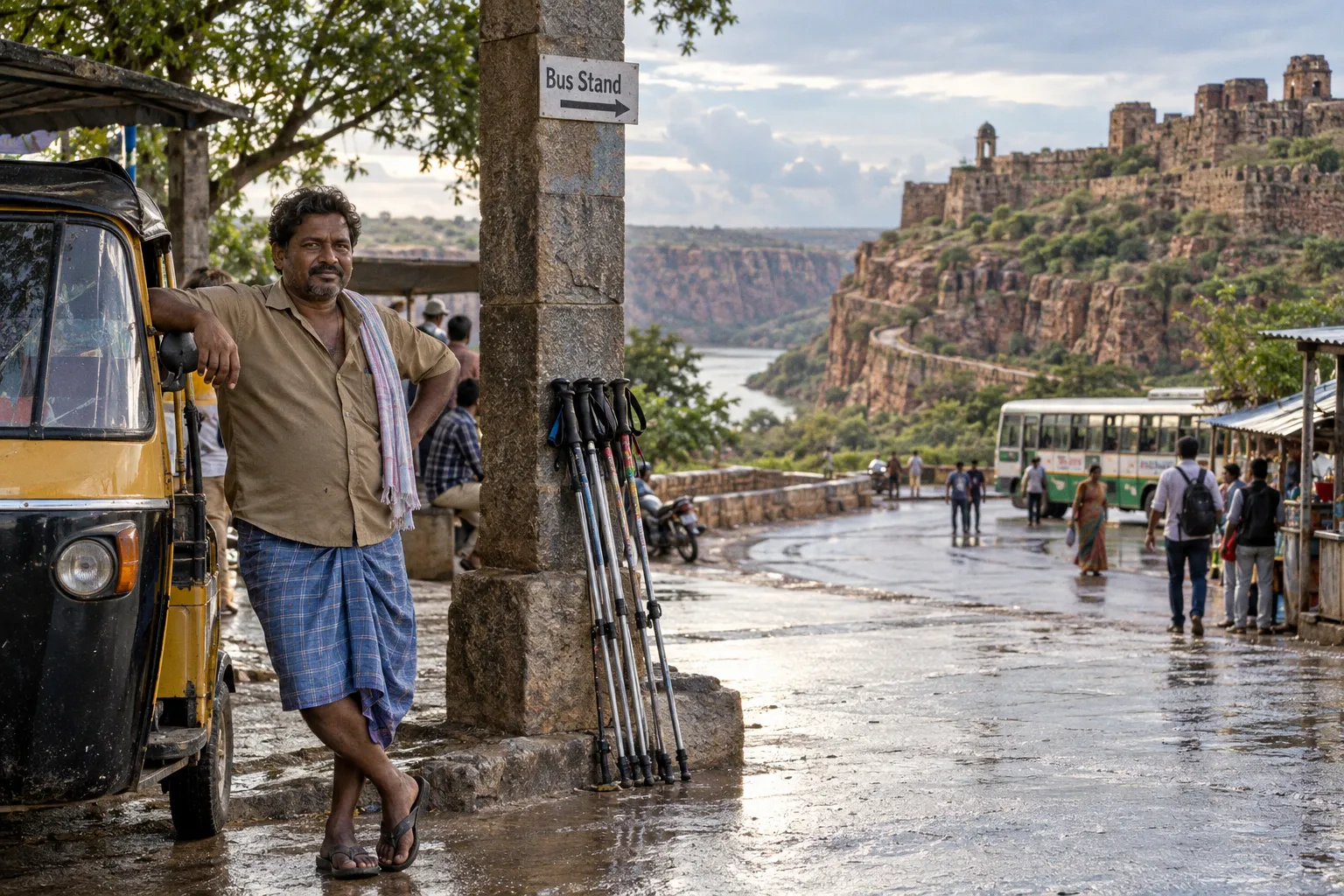
Presented at the IATO convention in Visakhapatnam, the routes link temple architecture, sacred ghats, river cruises, delta history, and pilgrimage landmarks across different branches of the Godavari. For independent heritage travellers, the important change is not simply the number seven, but the possibility of planning by landscape and cultural theme rather than trying to cross the entire region in one loose sweep.
Seven routes, seven ways to read the river
The Sacred Godavari circuit follows temples positioned along the Gautami, Vriddha Gautami, Vainateya, and Vasishta branches, including Draksharamam, Kotipalli, Mukteswaram, Muramalla, Kundaleswaram, Ainavilli, Appanapalli, Ryali, and Antarvedi. It is the most geographically riverine of the announced routes, and its structure makes clear that the Godavari is not one linear corridor but a branching system of water, shrines, and settlements.
The Pancharama Kshetras circuit instead creates a five-temple pilgrimage line: Kumararama at Samalkota, Bhimeswara at Draksharam, Somarama at Bhimavaram, Ksheerarama at Palakollu, and Amararama at Amaravati. Travellers interested in sacred architecture will need to treat this as a regional traverse rather than a compact monument walk, since the route connects sites across a broad area.
Three further circuits gather related traditions. Shaktipeethas and Devi Kshetras includes Talupulamma Lova, Pithapuram, Draksharamam, Nidadavolu, Penugonda, and Bhimavaram, with Puruhutika Devi at Pithapuram and Manikyamba Devi at Draksharamam among the named shrines. Vaishnava Divya Kshetras links Annavaram, Sarpavaram, Gollela Mamidada, Korukonda, Rajamahendravaram, Vedapalli, Ryali, Appanapalli, and Dwaraka Tirumala.
The Godavari Heritage Temples circuit is particularly relevant to visitors who want the architectural layer alongside the religious one. It covers Ainavilli, Kotipalli, Draksharamam, Bikkavolu, Samalkota, and Dwarapudi. Bikkavolu is identified in the report for its ninth- and 10th-century Eastern Chalukyan temples and monolithic Ganesha sculpture, giving this route a more explicit heritage focus.
Where river tourism intersects with built history
The Pushkar Ghat Temples circuit centres on Rajamahendravaram and its surroundings, including Pushkar Ghat, Markandeya Swamy Temple, Umakotilingeswara Swamy Temple, Ujjaini Mahakaleshwar Temple, the ISKCON temple at Gowthami Ghat, and Lakshmi Janardhana Swamy Temple at Dowleswaram. Here, the route is arranged around a concentrated urban and riverside setting rather than a long chain of distant sites.
The broadest concept is Akhanda Godavari, which combines river tourism, history, culture, and landscape. Its named stops include Pushkar Ghat, Papikondalu river cruises, Kandukuri Veeresalingam’s former residence, the 1897 Havelock Bridge, Sir Arthur Cotton’s residence at Bommuru, and the Sir Arthur Cotton Museum at Dowleswaram. Kadiyapulanka, part of the century-old nursery belt of Kadiyam, is also included, before the circuit continues through Draksharamam, Ainavilli, and Ryali toward the Konaseema landscape.
For travellers accustomed to planning around a single fort or canyon viewpoint, as we do around Gandikota, this is a useful distinction: the announced circuits are not interchangeable sightseeing lists. Some are organised by religious tradition, some by architectural heritage, and one by the movement of the river through history and landscape.
What to check before choosing a route
The announcement gives us the principal destinations, but the supplied report does not establish travel times, operating schedules, booking arrangements, accommodation, access conditions, or whether each circuit will be offered as a continuous guided excursion. Those practical details matter greatly in a region where the routes branch across temple towns, ghats, bridges, delta settlements, and river-cruise points.
The safest planning approach is therefore to select one circuit according to your main purpose before adding nearby sites. Choose Godavari Heritage Temples for architecture, Akhanda Godavari for the strongest mix of river and cultural history, or Pushkar Ghat Temples for a more concentrated Rajamahendravaram-based itinerary. Pilgrimage-focused visitors have four clearly defined options, but should still verify how the route is sequenced and how long transfers between clusters will take.
For the best field experience, watch for the later release of official schedules and access information rather than assuming that a named circuit already functions as a ready-made tour. The geography is the story here: allow the route to unfold along its branches, and do not mistake a thematic map for a short day trip.