Kumik Village Becomes Ladakh’s First Official Heritage Site
According to GKToday, Kumik village in Zanskar has been declared Ladakh’s first designated Heritage Village, a decision announced by Lieutenant Governor Vinai Kumar Saxena during the launch of the…
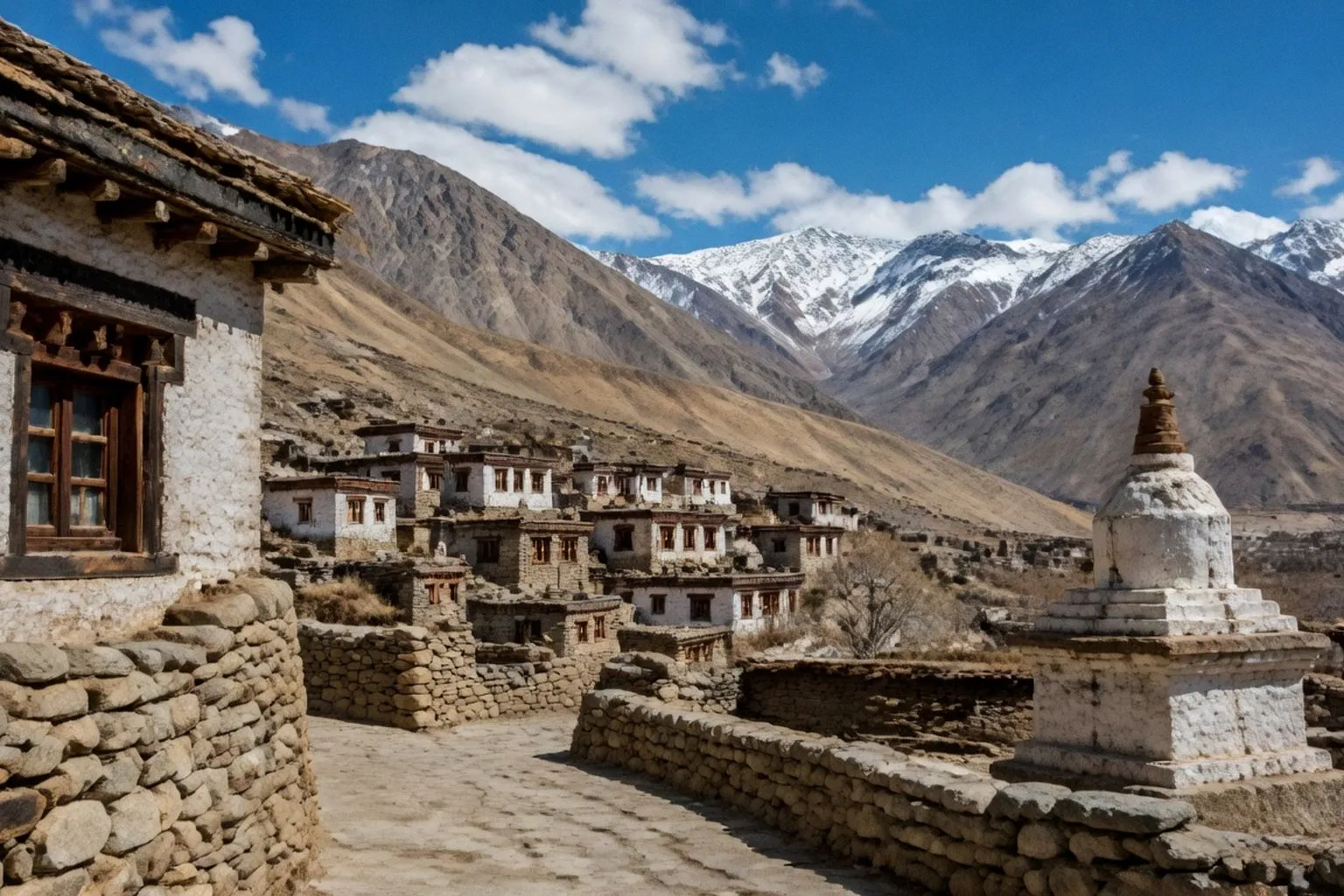
According to GKToday, Kumik village in Zanskar has been declared Ladakh’s first designated Heritage Village, a decision announced by Lieutenant Governor Vinai Kumar Saxena during the launch of the Ladakh Zanskar Festival 2026. The designation places a high-altitude settlement, rather than a single monument, at the centre of a heritage-tourism conversation—one shaped by traditional mud houses, Buddhist cultural materials, sacred spaces, and long-preserved local practices. For travelers who plan routes around living landscapes, the important question is not simply whether Kumik has gained a new title, but what that title will mean on the ground.
A village recognized as a cultural landscape
Kumik is part of Zanskar, a high-altitude region in Ladakh with a strong Tibetan Buddhist cultural presence. Its heritage is described through several intersecting layers: traditional houses built from locally available earth, stone, and wood; agricultural practices adapted to a cold-desert environment; sacred spaces; and Buddhist traditions preserved through both material and oral forms.
The village also holds textual heritage, including Kanjur manuscripts and other Tibetan Buddhist materials. Kanjur refers to a canonical collection of Buddhist texts in the Tibetan tradition, so the significance of Kumik is not limited to what can be seen from a trail or photographed along a village lane. Its cultural value also lies in knowledge systems, religious practice, and the continued relationship between buildings, landscape, and community life.
That distinction matters for visitors. A heritage village is not necessarily a conventional monument complex with a defined entrance, viewing platform, or linear sightseeing circuit. Here, the heritage designation is connected to the protection of traditional high-altitude mud architecture and historic Buddhist cultural artifacts, while also aiming to advance heritage tourism.
What the designation does—and does not yet tell travelers
The announcement identifies Kumik as Ladakh’s first designated Heritage Village, and links the move to the Union Government’s vision of combining development with heritage conservation. It does not, however, establish the details a traveler would normally need before building an itinerary: visitor facilities, access arrangements, accommodation, opening schedules, guided routes, or any formal interpretation system.
That absence is a practical point rather than a minor footnote. When a place receives heritage recognition, its visibility may grow faster than the systems needed to receive visitors responsibly. At Kumik, travelers should therefore avoid assuming that a new designation automatically means a fully developed tourism site. The available information supports the importance of the village; it does not confirm how the status will be managed day to day.
For independent explorers, the safest reading is to treat Kumik as a culturally significant settlement within Zanskar, not as a guaranteed stop with standardized services. The village’s mud architecture and Buddhist materials should be approached as part of a living heritage environment, where restraint and attention to local context matter more than collecting a quick viewpoint.
A new marker on the heritage map
The declaration places Zanskar more visibly within Ladakh’s heritage-tourism framework, alongside the region’s monasteries, manuscripts, oral traditions, and high-altitude building practices. It also reinforces a broader idea of heritage travel: the route is not only between famous structures, but through settlements where architecture, faith, agriculture, and terrain remain closely connected.
For now, the practical detail to monitor is implementation. The announcement establishes recognition and intent, while the visitor-facing consequences remain unspecified. Before setting out, check whether local authorities or reliable regional operators publish updated information on access, conservation expectations, and visitor arrangements. If those details are still unclear, build the journey around patience rather than assumptions—and allow enough time to understand where the village’s cultural landscape begins, rather than treating it as a point to be crossed off a map.