New Karnataka Tourism Projects: Clarifying the Impact on Gandikota Travel Plans
According to Deccan Chronicle, the Karnataka Cabinet has approved two tourism initiatives: a ₹53 crore eco-friendly beachfront glamping facility and marine experience centre at Tannirbhavi, along…
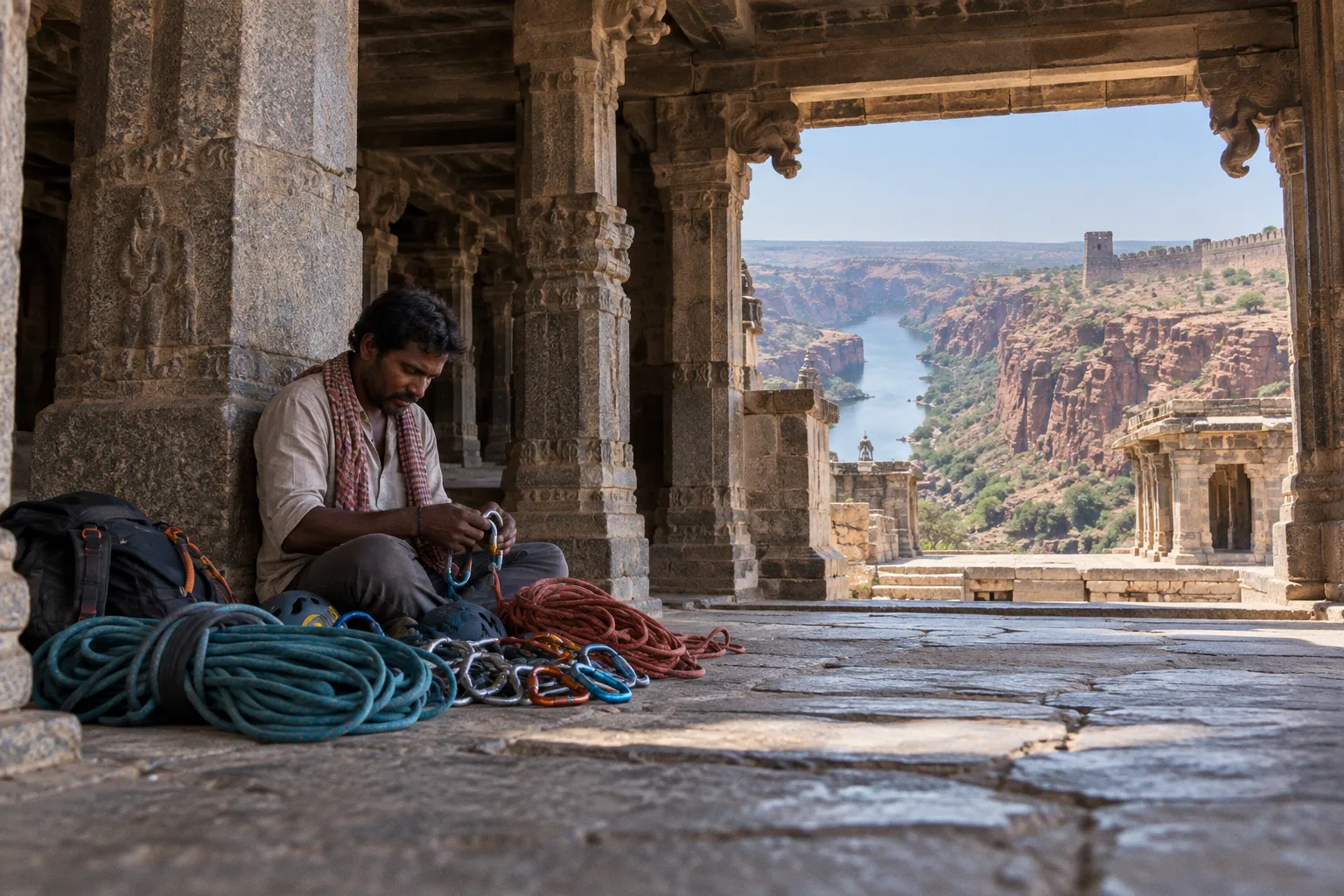
According to Deccan Chronicle, the Karnataka Cabinet has approved two tourism initiatives: a ₹53 crore eco-friendly beachfront glamping facility and marine experience centre at Tannirbhavi, along with a ₹64 crore eco-retreat project at Ravoor in Chikkamagaluru district. For travellers planning a Gandikota expedition, the important point is not an immediate change at the Pennar Gorge, but a wider shift in how Karnataka is packaging nature-based stays and regional tourism.
The announcement does not identify Gandikota, its fort, or the canyon as part of either project. It therefore should not be read as confirmation of new campsites, visitor facilities, roads, or guided experiences at the gorge.
A regional tourism signal, not a Gandikota route update
The two approved projects sit in different landscapes from Gandikota. Tannirbhavi is associated in the report with a beachfront glamping facility and marine experience centre, while Ravoor is described as the location of an eco-retreat in Chikkamagaluru district. Their inclusion in the same cabinet decision suggests a broad tourism programme spanning coastal and inland destinations, but the available details do not explain the construction schedule, operating model, access arrangements, or environmental conditions attached to either project.
That distinction matters when we plan a trip around the canyon. A government approval is not the same as an open attraction, and a tourism project elsewhere in Karnataka does not automatically create a new link in a Gandikota itinerary. For now, the practical map remains unchanged: treat the gorge, fort area, camping options, and approach roads as separate elements requiring their own checks before departure.
The wider policy context is also beginning to attract attention. The Week has separately highlighted the significance of Karnataka’s Coastal Malnad Tourism Policy 2026, although the available report does not provide enough detail to establish how that policy connects to the two approved projects or whether it has any direct bearing on Gandikota.
What independent explorers should watch
The most useful details are still missing. There is no confirmed opening date for the Tannirbhavi facility or the Ravoor retreat, no stated timeline for construction, and no published information in the evidence available here about bookings, access restrictions, camping rules, or visitor capacity. Until those points are clarified, travellers should avoid building a route around facilities that may remain only at the approval stage.
For Gandikota, this is a reason to separate confirmed site conditions from the language of tourism expansion. New projects can eventually strengthen Karnataka’s network of outdoor destinations, but they can also introduce unfamiliar access patterns, booking systems, or restrictions once operational. None of those consequences has been established for the Pennar Gorge.
If you are combining Gandikota with other Karnataka stops, keep the new announcements as background rather than as a promise of upgraded infrastructure. Check each destination independently, confirm whether a facility is actually open, and do not assume that the word “eco-friendly” tells us anything yet about the available accommodation, trails, or visitor services.
For the canyon itself, timing still matters more than regional cabinet headlines: plan your main fort and gorge walk around the light you want on the red quartzite cliffs, and verify local arrangements close to departure rather than relying on a newly approved project elsewhere in the state.